Dock Building in New Jersey for lakefront or waterfront properties is not merely about building a platform above the water. Well-designed residential docks not only give easy water access but support various activities while complementing the surrounding landscape and taking into account the changing water conditions. Be it a construction of a new or reconstruction of an old dock, it is better to know why materials and design of the dock matter, as this will let you make the best decisions that will make your waterfront property even more functional and enjoyable.
Why Does Residential Dock Design Matter?
A residential dock often turns out to be one of the most used constructions of a waterfront property. It may serve as a launching point for a kayak, boat docking station, viewpoint to appreciate the views or spending time with a family there.
But a dock should be good not only for its looks.
Wrongly designed docks may cause various problems with access, require constant repairing or will fail to cope with changing water conditions.
Professional construction of a lakefront dock pays attention to the way the homeowners plan to use it while considering such important aspects as shoreline conditions, water depth and structural stability.
Well-planned design lets create such waterfront construction which feels like a natural extension of the property.
What Is Residential Dock Construction?
Residential dock construction implies creating the structure which stretches from the shoreline or gives access to the water.
Depending on the site and intended usage, docks may have various types of foundations – fixed ones, floating constructions or others engineered ways.
The design of the dock greatly depends on water conditions, site restrictions and regulations.
Types of Residential Docks
Fixed docks use permanent foundation and are usually used in places where water conditions and site conditions allow fixed constructions.
Floating docks float with water level variations and are convenient in some waterfront environments.
Sectional docks consist of connecting parts which may give the possibility of seasonal removal and other advantages, depending on the particular system.
Each type of docks has its own advantages and limitations. Experienced dock builders will help you find out which one suits your property.
Key Elements of a Well-Designed Residential Dock
The well-designed dock is a combination of structure, easy access and convenient design.
There are several important elements which should be considered during the planning process.
Strong Structural Support
The support system of the dock should be able to endure loads and environmental conditions.
Water depth, bottom conditions, wave action and seasonal variations should be taken into consideration during the design process.
Proper Choice of Decking Materials
The decking materials should be chosen according to moisture resistance, traction, ease of maintenance and durability.
Among common choices are pressure-treated lumber, composite decks and other decking material appropriate for particular application.
Easy Access
Connection of the shoreline and dock should be comfortable.
Depending on the design, it may imply installing steps, ramps or transition platforms.
Correct Dimensions
Dimensions of the dock should be determined by the activities which are supposed to be done, available space on the shore and other restrictions.
The dock that is intended for fishing is designed differently from the one which should provide access and comfortable seats.
How Does the Design of Dock Affect Daily Usage?
The layout of the dock defines how comfortably you can move on it and use its space.
When you choose the design, you should think about the activities which you will use it mostly.
For example, a narrow passage is enough for a small boat, while a wide platform is better for sitting or fishing.
Popular Waterfront Deck Ideas
If you look for waterfront deck ideas, you may consider:
- extended platforms giving additional space for relaxation;
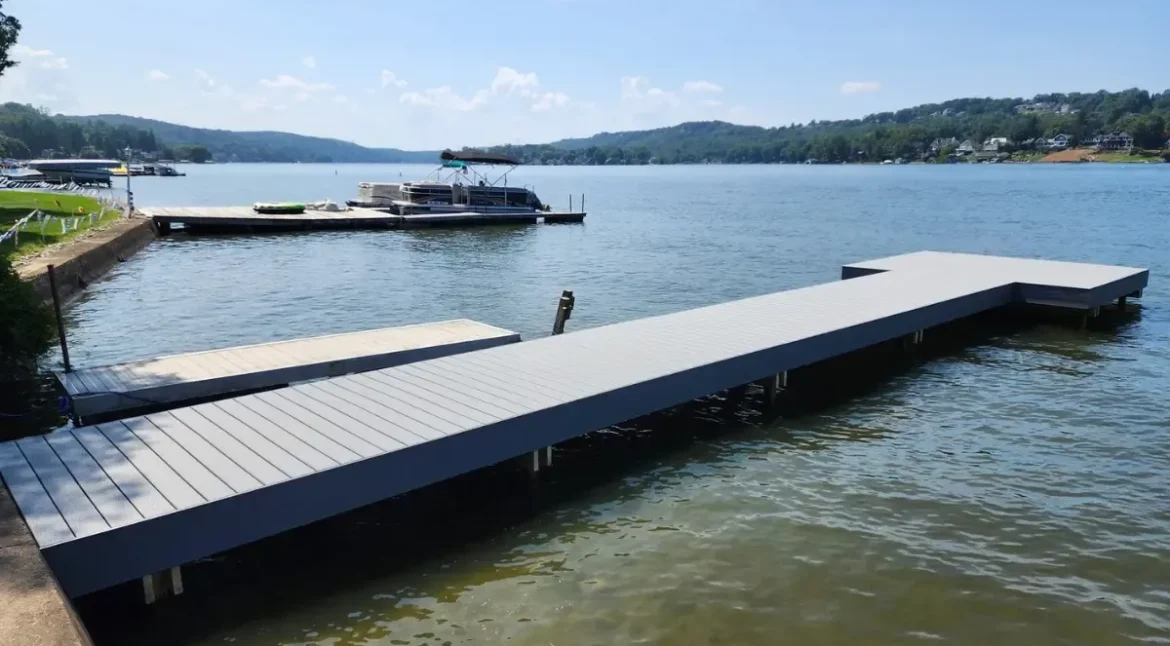
- L-shaped layout dividing it into walkway and area for waterfront activities;
- built-in seats giving possibility to enjoy the views without moving furniture;
- layouts providing appropriate boat boarding;
- coordinated materials of the deck matching the exterior of the house;
- low-profile lighting if it is allowed and appropriate.
Design features should be always considered along with structural requirements, local regulations and physical conditions of the property.
Advantages of Professional Dock Building
Professional construction of the dock brings additional advantages beyond its beautiful appearance.
Experienced dock builders will help you understand all the practical issues of waterfront construction.
Enhanced Functionality
The properly planned dock will allow you to carry out the activities you would like to – boating, fishing or relaxing by water.
Proper Material Choice
Choosing the materials appropriate for the environment will help to avoid unnecessary degradation and maintenance.
Careful Shoreline Integration
Placement of the dock should take into account existing landscaping, access paths and shoreline conditions.
Long-term Planning
Professional construction will encourage you to consider the future maintenance, seasonal changes and future usage of the dock.
These advantages explain the importance of careful planning before waterfront construction.
What Should Be Considered Before Building a Dock
Every waterfront property has its own conditions influencing the design of the dock.
It is important to understand them for setting realistic expectations before the start of construction.
Water Depth and Bottom Conditions
Water depth and bottom conditions of the lakebed or shoreline may affect the construction of the support system.
Rocky, muddy or uneven bottom conditions require special construction methods.
Seasonal Water Changes
Some waterfronts experience the seasonal changes of water levels.
Docks should be constructed considering seasonal water conditions.
Access to the Shoreline
Conditions of the shoreline may influence equipment access and project schedule.
Properties having steep slopes, narrow access paths or landscaping require additional planning.
Permits and Environmental Requirements
Dock construction in New Jersey may require local permits, requirements of lake associations or environmental regulations of state and federal agencies.
Regulations depend on the water body, location and construction of the dock.
You should clarify the permits and requirements before you start the construction.
Maintenance Expectations
Even the well-built dock requires regular maintenance.
Fasteners, decking, supports and connections should be checked for the signs of wear or damage.
Did You Know?
Requirements of the dock construction may vary for waterfronts located in the same region because of the differences in shoreline conditions, classification of waterbodies and local regulations.
Why Choose Professional Dock Construction Services?
Constructing a dock requires the knowledge of the construction methods, access to the water, materials characteristics and environmental conditions.
A professional contractor will evaluate your project requirements and help to develop a dock design appropriate for your property.
Instead of choosing a dock only according to its looks, it is important to consider how this structure will function in everyday use.
Steel Penn provides services for residential dock construction.
Discussing your goals, shoreline conditions and preferred design features will help to define the scope of work.
Are You Looking for Dock Construction Services in Your Region?
When you plan the construction of the dock, it is important to evaluate first what activities you expect from your dock.
You should decide whether it will serve for boating, fishing, swimming or just relaxation.
Understanding the intended use will help you to discuss the dimensions, materials and layout with a contractor.
Steel Penn can be contacted for discussion of the residential dock construction project.
When to Contact a Professional?
It is time to contact a professional for your dock construction project when you plan to construct a new waterfront structure, replace your aging dock or make some modifications in your existing one.
Such consultation is especially important when the shoreline presents unusual conditions or when your project may require environmental approvals.
If you see that your existing dock has unstable supports, loose decking, or signs of deterioration, it is better to stop using it until you get its evaluation from a professional.
Conclusion
Well-designed residential dock is a combination of comfortable access, proper dimensions, suitable materials and layout which matches the surrounding waterfront property.
From the choice of fixed or floating design to seating arrangement and shoreline access design features will form the final product.
Professional construction of the lakefront dock will help you to consider both appearance and functionality before building the new dock.
Proper planning will make your residential dock functional and comfortable part of the waterfront living.
You should contact Steel Penn at 973-459-1357 to discuss your residential dock construction project.
Frequently Asked Questions
Why does a residential dock become well-designed?
Well-designed residential dock is the one that gives comfortable water access, appropriate structural support and enough space for its activities. It should consider water depth, shoreline conditions, material durability and maintenance needs. The design should comply with regulations and meet your needs in waterfront usage.
What materials are used for constructing residential docks?
Various materials may be used for residential docks: pressure-treated lumber, composite decks, aluminum components and others. It depends on structural requirements, moisture resistance, maintenance preferences and budget. All materials should be evaluated for durability, traction and appropriateness for the particular waterbody and construction method.
Is it necessary to get permits for building a dock in New Jersey?
Depending on the location and the scale of your construction project, you may need municipal permits, state environmental permits, lake association permits and other. These requirements may differ for various waterbodies. You should clarify them before the construction begins.
What is the difference between fixed and floating docks?
The fixed dock has a permanent support, while floating dock floats due to buoyant components. Both have their advantages depending on water depth, seasonal changes, shoreline conditions and intended use. Professional evaluation will help you to find out which type of dock is more appropriate for you.
Is it possible to include seats or relaxation zone into a residential dock?
Yes, residential docks may have such additional features as wider platform or seating area according to the structural design and regulatory requirements. You should consider available space, loads and comfort of movement on the dock.
How often should a residential dock be inspected?
The residential dock should be inspected regularly, especially after winter weather, storms and water condition changes. You should check fasteners, decking, structural supports and visible signs of deterioration. Qualified professional should inspect the structure to use it again, especially if any movements or damages appeared.